
Whether you’re a technician ready to go out on your own or an investor looking to buy an existing operation, starting or buying an auto repair shop involves a different set of real estate considerations than most small business real estate decisions. The building itself carries specialized requirements, and the path to financing and acquiring the right space looks different from a typical retail or office buildout.
Here’s an overview of what to think through, with a focus on the real estate and financing side of the decision.
This post focuses on the real estate and financing side of opening an auto repair shop. It is general and educational, not business, legal, or state-specific licensing advice.
Buy an Existing Shop, or Start From Scratch?
This is usually the first fork in the road, and it has real trade-offs:
Buying an existing, operating shop gets you an established customer base, existing equipment, and often an easier financing path (lenders can underwrite against real operating history). The trade-off is a higher upfront cost and less control over the starting condition of the building and equipment. See our guide to auto repair shops for sale for what to evaluate in a purchase.
Starting from scratch — either building out a raw space or converting an existing building to automotive use — gives you full control over layout and equipment but means building a customer base from zero and a financing process that leans more heavily on your personal experience and business plan than on operating history.
Buy the Real Estate, or Lease It?
A second early decision: do you want to own the building, or lease space and put your capital into equipment and working capital instead?
Buying gives you long-term control, potential appreciation, and eligibility for owner-occupied financing programs like SBA loans. Leasing requires less upfront capital and more flexibility if your plans might change, but comes with landlord negotiations over buildout and equipment ownership. See our auto repair shop leasing guide for what to negotiate if you go this route.
What the Building Needs
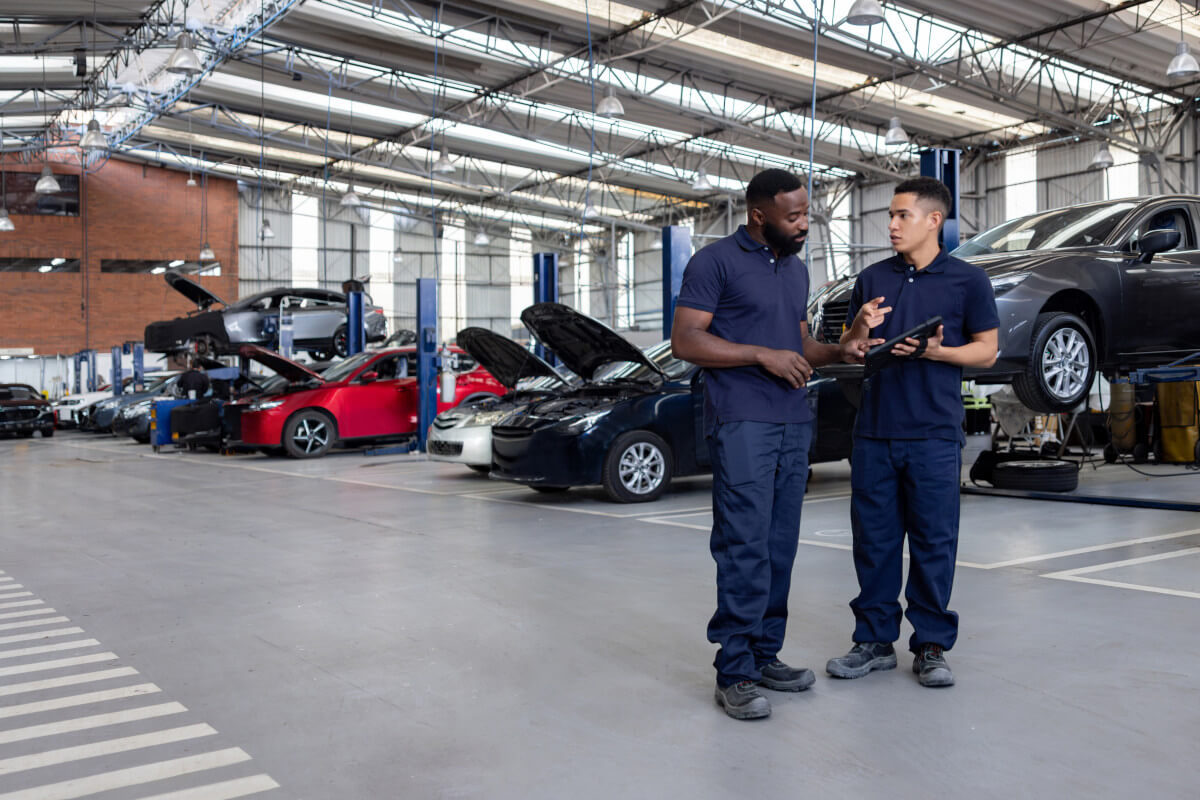
Regardless of whether you buy or lease, an auto repair shop building needs to support:
- Adequate bay count and lift capacity for the type of work you plan to do
- Sufficient ceiling height and door clearance for the vehicles you’ll service
- Three-phase power and compressed air infrastructure
- Proper ventilation for exhaust and chemical fumes
- Zoning that permits automotive repair use — not just automotive sales — in that specific jurisdiction
Retrofitting a non-automotive building to meet these requirements can be costly, which is why many operators specifically seek out buildings with prior automotive use rather than converting a general commercial space from scratch.
Financing Your Purchase or Buildout
Most owner-operators financing a shop purchase or buildout look at SBA loan programs, which are specifically designed to help small business owners acquire commercial real estate and finance business acquisitions. The two most common paths — SBA 504 and SBA 7(a) — work differently and suit different situations depending on whether you’re buying just the real estate or a combined business-and-real-estate purchase. See our SBA 504 vs. 7(a) breakdown for how the two compare.
Don’t Skip Environmental Due Diligence
Auto repair properties carry a higher likelihood of environmental considerations than most commercial property types, largely due to historical use of underground storage tanks, hydraulic lift fluid, and solvents. This applies whether you’re buying an existing shop or converting a previously-used automotive building. Most lenders will require at least a Phase I Environmental Site Assessment before closing. See our environmental due diligence guide for what that process typically involves.
What Makes a Shop Successful Long-Term
Beyond the real estate and financing decisions, a few operational factors tend to separate consistently successful shops from struggling ones: visibility and easy access for walk-in and drive-by customers, a bay count that matches realistic service capacity for your target customer volume, and a location with enough vehicle traffic to support the business without excessive competition from established shops nearby. These are all real estate questions as much as business questions, which is exactly why the site selection process matters as much as the buildout itself.
Getting Started
If you’re ready to start evaluating specific properties, our Auto Repair Shops For Sale page covers what to look for in a listing, and Doug has spent years specifically in auto repair real estate transactions across Georgia and the Southeast.
Frequently Asked Questions
How much does it cost to start an auto repair shop? Costs vary enormously based on whether you’re buying an existing operation, leasing and building out a new space, or purchasing raw real estate, plus equipment, licensing, and working capital needs. We’re happy to walk through realistic cost ranges for your specific plans — contact us to discuss.
Do I need a specific license to open an auto repair shop? Licensing requirements vary by state and sometimes by county or city. This is outside our scope as a real estate broker — check with your state’s licensing board or a business attorney for current requirements in your specific location.
Is it better to buy or lease an auto repair shop building? It depends on your capital position and long-term plans. Buying builds equity and offers financing programs like SBA loans; leasing requires less upfront capital and more flexibility. See our buying vs. leasing comparison for the trade-offs.
Can I convert a non-automotive building into an auto repair shop? Yes, but it can be costly depending on what infrastructure is missing — lifts, compressed air, upgraded electrical service, and ventilation all need to be added if they’re not already present, in addition to confirming the zoning permits the use.
What’s the biggest mistake new auto repair shop owners make with real estate? Underestimating environmental due diligence timelines and costs, and choosing a location based on rent or purchase price alone without adequately weighing traffic, visibility, and local competition.